GREAT BARRIER REEF SPONSORSHIP
The WCTE 2025 Conference Committee found a uniquely Australian way to help offset the carbon footprint of the conference by contributing to the creation of a full coral tree at the Great Barrier Reef.
Part of participants registration fee was allocated to the Reef Restoration Foundation’s Resilience & Recovery program.
The WCTE 2025 Coral Tree has now been installed, and updates are included below.
We encourage delegates to visit the Great Barrier Reef during their time in Queensland and visit the WCTE 2025 Coral Tree.
GREAT BARRIER REEF UPDATE
Reef Update: 25th February 2025
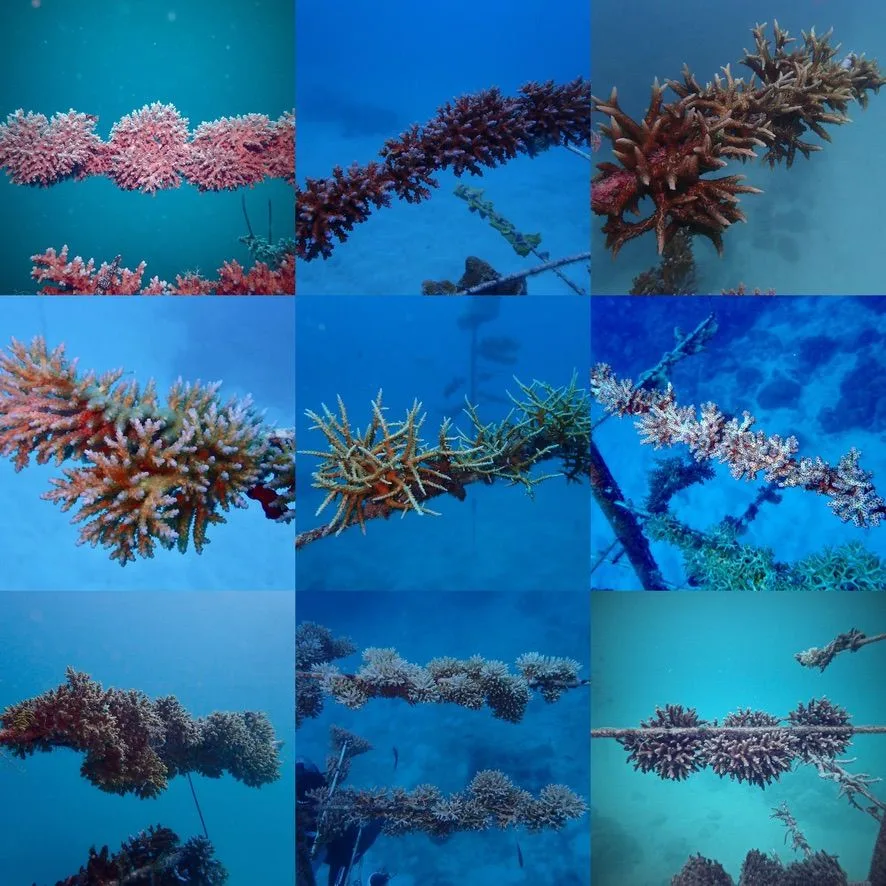
The variation to our methodology is well underway with all three sites gradually becoming stocked with corals sourced from mature colonies on the reef. Initial stocking is methodical as we must ensure genetic diversity in our midwater nurseries, or we risk bottlenecks at spawning that can result in reduced resilience in subsequent generations. That would be the opposite of the desired result. A variation to our permits has ensured we have the capability to work with all coral species rather than just a few of the fast-growing branching corals. This enables us to form nurseries with species diversity and genetic diversity within species. I am not aware of any other operation anywhere doing this sort of work, mostly because many reefs elsewhere are far more degraded than here. We use geographically dispersed collection sites as a proxy means for mitigating the risk of using clones in the nursery. It also spreads our collection effort and reduces our footprint. The trade-off is that the method takes time to complete. All that stocking work is front end loaded then dissipates to monitoring over time. We do the monitoring with photogrammetry which uses AI to convert thousands of 2D digital images to accurate 3D depictions where we can measure changes to surface area with great accuracy over time. Surface area is a known proxy for fecundity. As coral reproduction is our game, this is the information that is important to us. The dataset will develop over time. None of our nursery genotype clusters were reproductively viable at Moore or Hastings Reef for the 2024 synchronous spawning, but they will be for the 2025 event likely to be in November. Annual production increases exponentially every year thereafter. There was very little spawning of any corals, nursery or otherwise, at Fitzroy Island in October as the reef at that inshore site remains coated in sediment following the record-breaking rain that accompanied Cyclone Jasper.
The variation to the method is essentially lengthening the duration of the stocking-to-outplanting cycle. In the advantageous environment of the water column, the corals grow faster and in every direction. Eventually, they’ll get too big for the nurseries and will need to be outplanted to the substrate. However, by leaving them in the nurseries for years, as opposed to months, each coral can spawn multiple times and grow to become robust mature colonies producing millions of gametes that result in hundreds of thousands of fertilised larvae every year. When the colonies are eventually outplanted, it will be done in conjunction with our in-house innovation for stabilising rubble fields. The rubble fields are formed from periods of wild weather that break up large areas of coral reef and leave unconsolidated rubble that next generation coral larvae will not settle on. It can take decades for these areas to naturally stabilise. Fast tracking stabilisation of rubble fields is a very effective means of reef restoration. Elsewhere, including elsewhere on the GBR, this is done using steel frames. Our method is organic. It’s still under development and, like our varied approach to using the midwater nurseries, it’s not currently sufficiently tested and quantified to be reported as results.
For all the advances in our thinking, the work remains dive intensive and that means we are naturally limited by physiology but also limited by tourism partner schedules and WH&S rules. To this end, we are seeking to develop a shore-based facility where all coral processing can take place high and dry with full working days every day. And the productivity from a single dive can be maximised. We will also undertake seasonal coral aquaculture and collaborate more effectively with scientists whilst providing a means for raising community awareness in a visitor centre setting. We are still in the regulatory approvals stage to retrofit an existing building, but this will be the making of us in conjunction with our progress in the ocean-based activities.
Reef Update: 17th September 2024
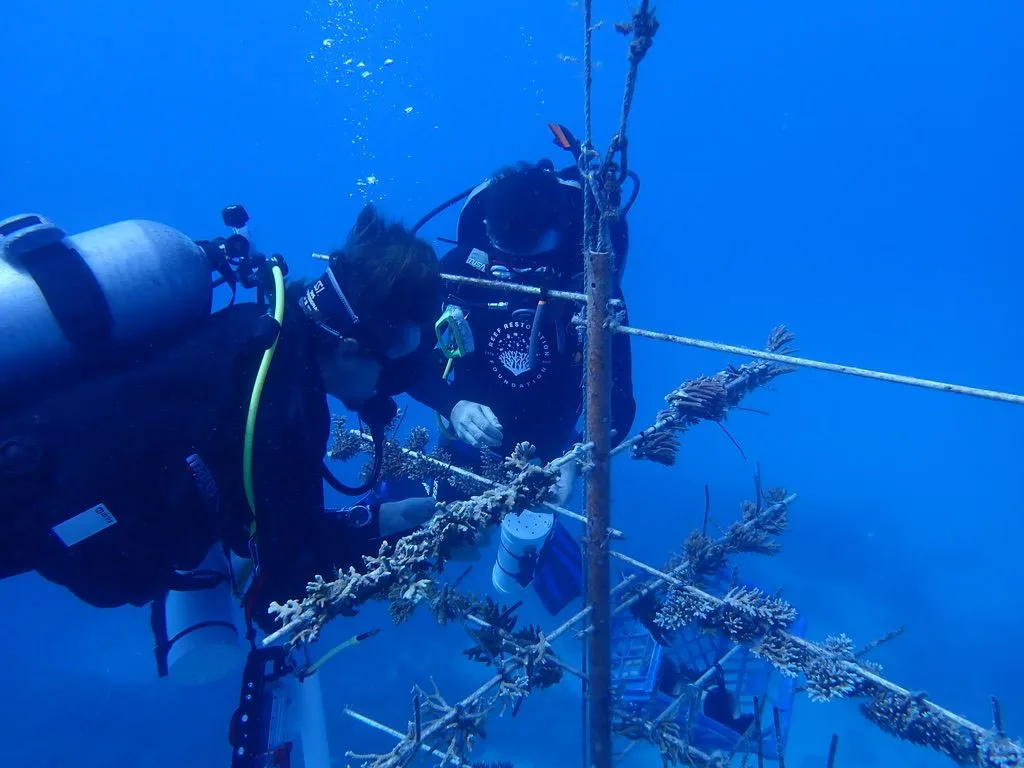
Populating the midwater nursery for WTCE 2025 is ongoing. Getting this part right is important and our team has integrated this task into a busy schedule at Moore Reef, about 55km east of Cairns.
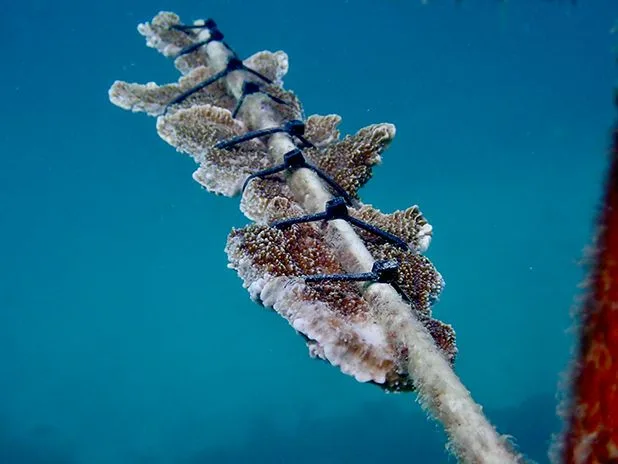
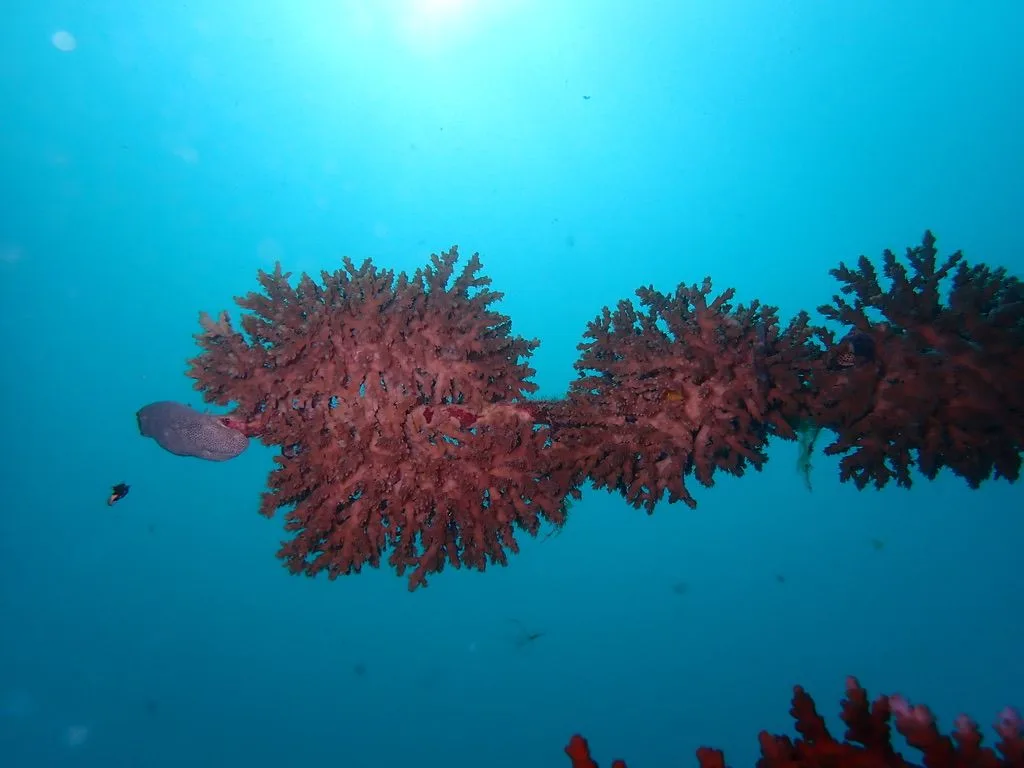
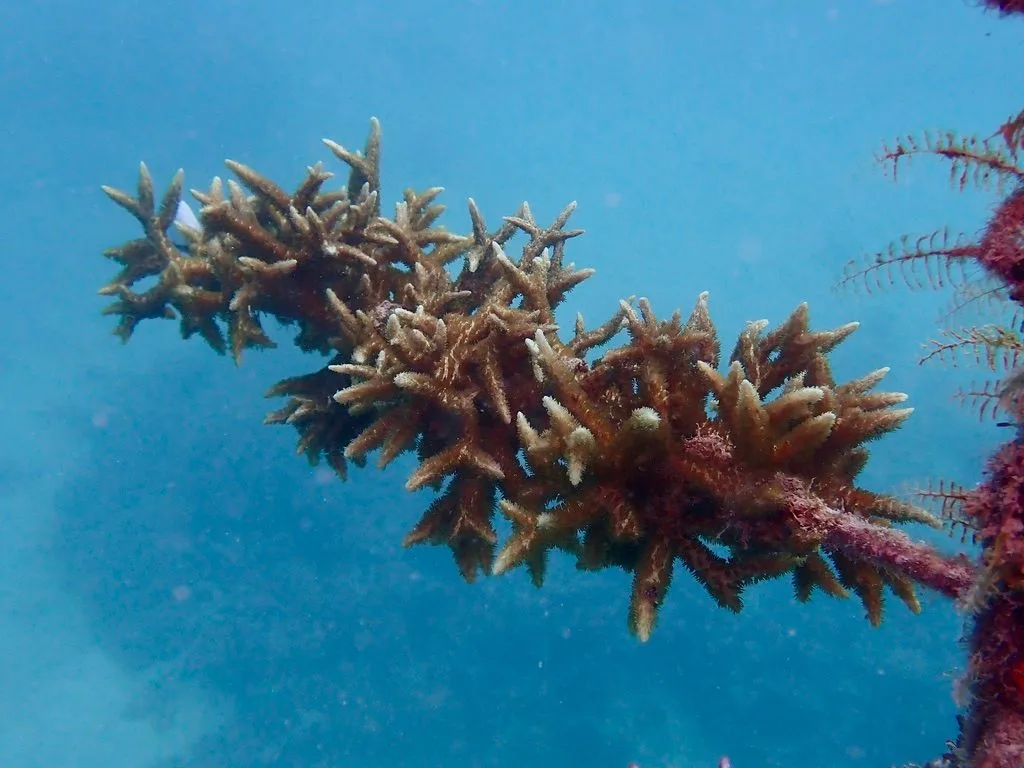
Each fibreglass branch on the midwater coral nursery is populated with large fragments cut from a mature colony on the reef in accordance with our permit. We cut fragments of each species from 10 separate mature colonies in disparate collection zones to ensure genetic diversity within species in our nurseries. We secure the fragments directly to the branches in genotype clusters. The fragments grow towards each other and fuse to form a single colony that will grow to reproductive maturity and spawn year after year. There are 40 branches on a coral nursery, and we are permitted to work with all species of hard and soft corals. It’s a meticulous task to fully populate a nursery, but it’s done once then left to add millions of fertilised larvae to the environment once it has attained sexual maturity.
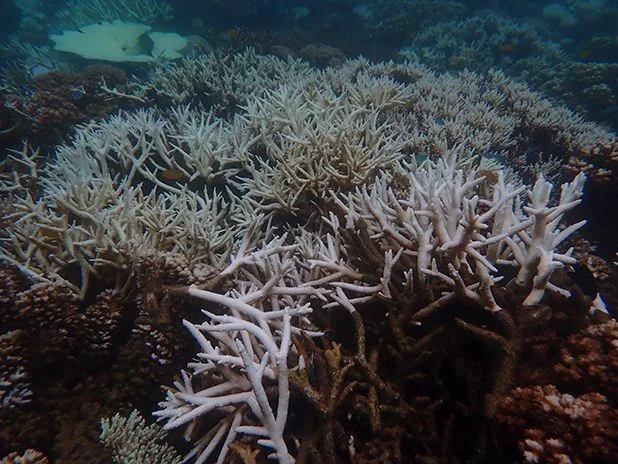
Our nurseries at Moore Reef are anchored in 25m depth but the nursery frame itself can be raised or lowered as required. This means that, if there is prolonged warm water that causes coral bleaching, we simply lower the spawning stock into deep water where it is cool.
reef restoration foundation

The Reef Restoration Foundation bolsters resilience on coral reefs and speeds up the natural process of recovery to slow the rate of change and allow species to adapt to the changing environment.
Their signature Resilience & Recovery program is designed to create and preserve coral spawning stock in the advantageous environment of mobile, midwater nurseries. Their focus is on species diversity and genetic diversity within species.
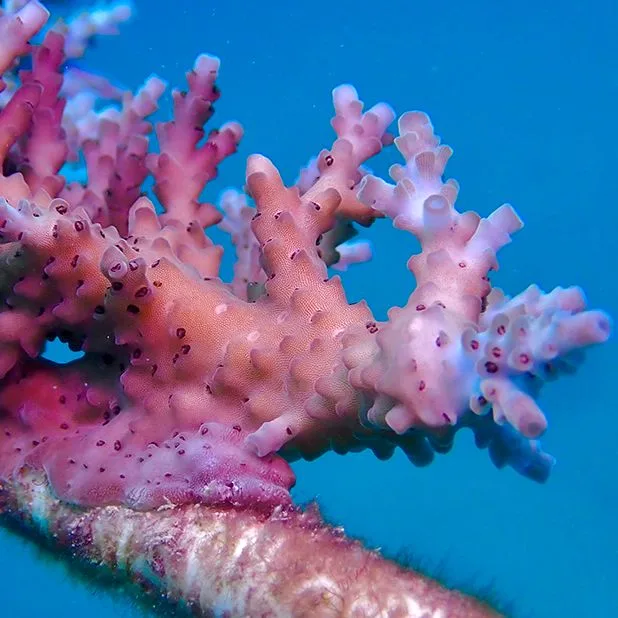 The program aims to achieve two core objectives:
- Create spawning stock that will produce hundreds of millions of additional coral larvae every year to help build resilience in the good times.
Lower the mobile nurseries during periods of warm water or wild weather to preserve the spawning stock, and turbo charge recovery in the bad times - Their program works with nature’s evolved cycle of disturbance and recovery but seeks to boost resilience through species diversity and genetic diversity within species; and to speed up recovery by using known success factors through growing corals faster in the water column away from the ecological limiters on the reef itself, such as parasites, predators, and competitors.